
Comma Butterfly
Butterflies are as important as pollinators as bees and have traditionally provided a flutter of beauty to British gardens in the summer. With a remarkable life cycle and seemingly infinite variations, these evocative insects need our protection and our help.
Today the Bee-Log takes a closer look at the striking and adaptable Comma butterfly.

Common Name: Comma
Latin Name: Polygonia c-album
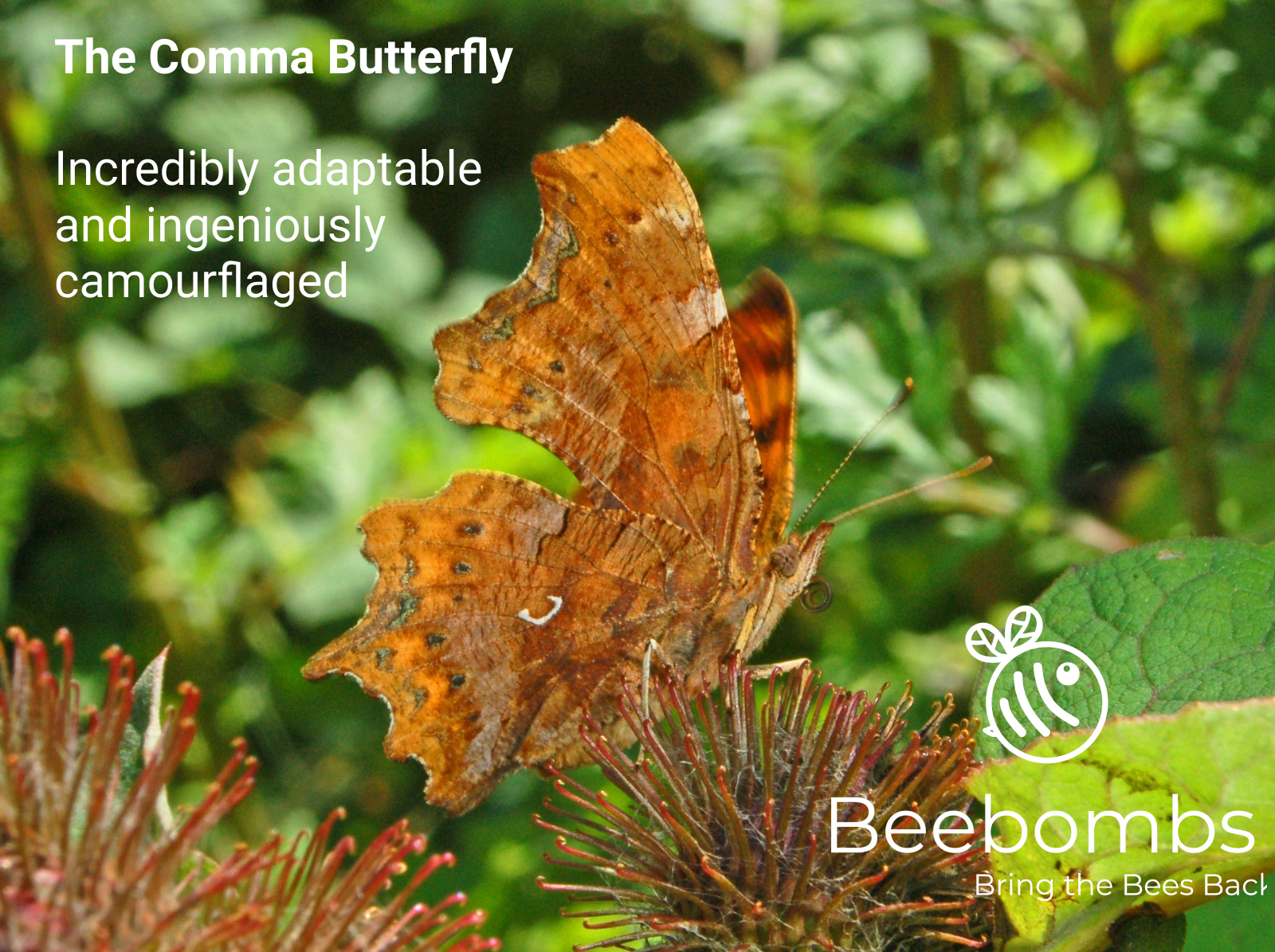
Information: The story of the Comma butterfly is remarkable. This ingeniously camouflaged pollinator has found a way to adapt to changing food stores and even climate change. One of the few butterflies to be increasing it's range, it's a story that can give us all hope.
Once widespread over England, Scotland and Wales, the Comma was thought to be have been wiped out in the 1800s by the reduction in farming of hops, which had formed the bulk of the food for it's larvae. Since the 1960s though, quite incredibly, the Comma has returned in abundance and even extended it's range. It has adapted to use the Common Nettle as it's main food source, proving that Mather Nature can be incredibly resilient.
Description: The Comma is also perfectly adapted to it's environment. Found most commonly in woodland areas, it's jagged leaf-like wings allow it almost disappear when at rest on a tree or leaf. The Comma gets it's name from the white mark on it's underside and will be spotted in gardens later in the summer as it's fattens up on nectar for hibernation.
Concern Level: Low
Distribution: Throughout the UK - woodlands, gardens and country lanes.

1 pack of handmade, native wildflower Beebombs. 1000s of seeds from 18 native wildflower species, mixed with local protective clay and sifted, nurturing top soil. 1 pack provides coverage for roughly 21 sq ft / 2m² of wildflower meadow.
Beebombs are a mix of annuals and perennial species, providing natural and diverse habitat. They’re specially designed to help support your local pollinators and provide a long flowering season, rich in colour and vibrancy.
Using seedballs protects the seeds from predators and provides a nurturing environment for the seeds to germinate from, making it easier for you to create the wildflower habitat Britain needs.
We use no plastic in our packaging or process and make your Beebombs in a truly sustainable and traditional way on our farm in Parley, Dorset.
Free tracked postage and packing on all orders, Dispatched same day (before 12pm) via Royal Mail Tracked 48 service, to anywhere in the UK.
Next day delivery also available.
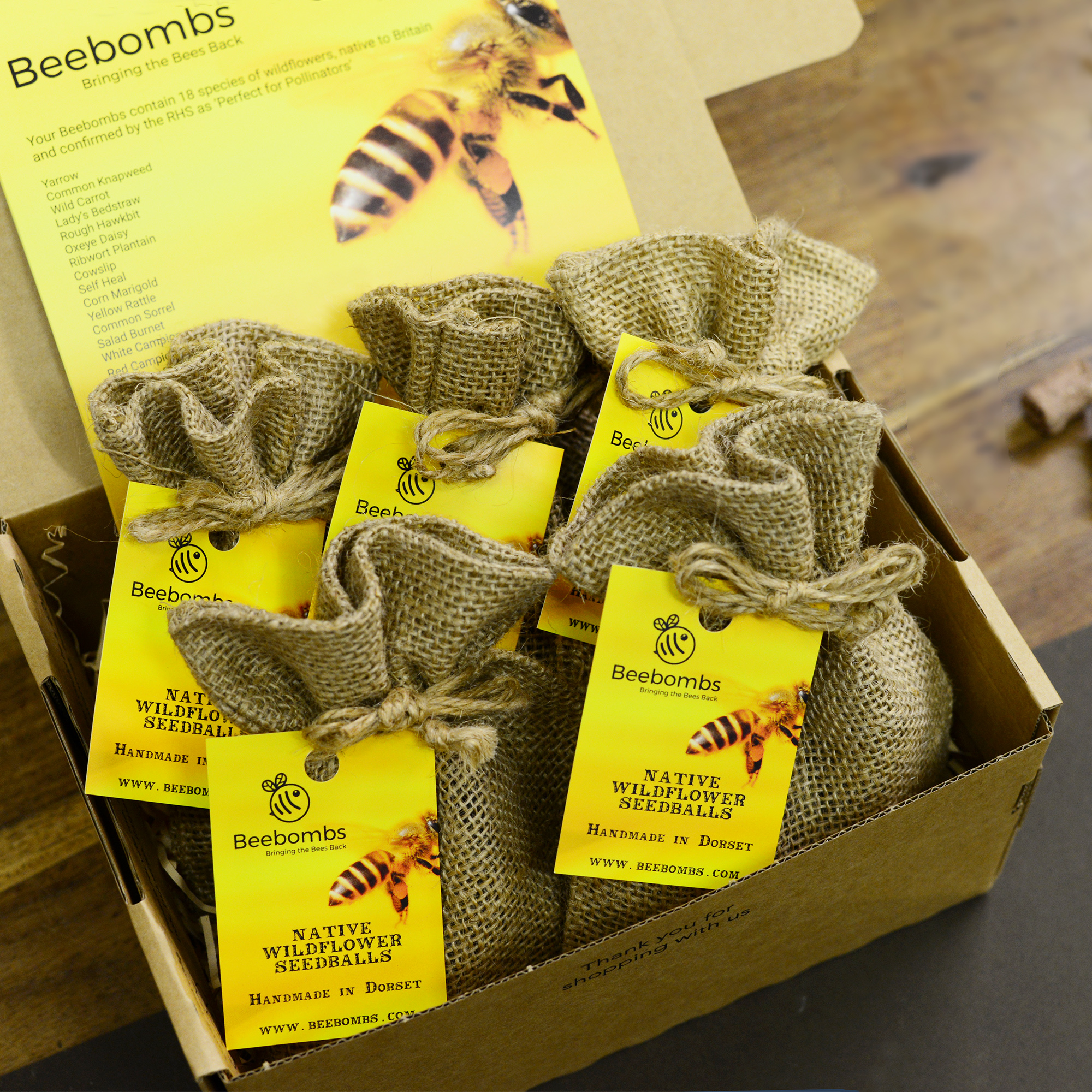
5 packs of handmade, native wildflower Beebombs. 1000s of seeds from 18 native wildflower species, mixed with local protective clay and sifted, nurturing top soil. 5 packs provides coverage for roughly 105 sq ft / 10m² of wildflower meadow.
Beebombs are a mix of annuals and perennial species, providing natural and diverse habitat. They’re specially designed to help support your local pollinators and provide a long flowering season, rich in colour and vibrancy.
Using seedballs protects the seeds from predators and provides a nurturing environment for the seeds to germinate from, making it easier for you to create the wildflower habitat Britain needs.
We use no plastic in our packaging or process and make your Beebombs in a truly sustainable and traditional way on our farm in Parley, Dorset.
Free tracked postage and packing on all orders, Dispatched same day (before 12pm) via Royal Mail Tracked 48 service, to anywhere in the UK.
Next day delivery also available.

10 packs of handmade, native wildflower Beebombs. 1000s of seeds from 18 native wildflower species, mixed with local protective clay and sifted, nurturing top soil. 10 packs provides coverage for roughly 210 sq ft, / 20 m² of wildflower meadow
Beebombs are a mix of annuals and perennial species, providing natural and diverse habitat. They’re specially designed to help support your local pollinators and provide a long flowering season, rich in colour and vibrancy.
Using seedballs protects the seeds from predators and provides a nurturing environment for the seeds to germinate from, making it easier for you to create the wildflower habitat Britain needs.
We use no plastic in our packaging or process and make your Beebombs in a truly sustainable and traditional way on our farm in Parley, Dorset.
Free tracked postage and packing on all orders, Dispatched same day (before 12pm) via Royal Mail Tracked 48 service, to anywhere in the UK.
Next day delivery also available.