
The Common Poppy: the scruffy superstar of British summer
If you’ve ever driven past a field edge in June and felt your brain go a bit quiet for a second, chances are it was poppies. That scarlet hit is ridiculously effective. Not tidy, not polite, not “curated”. Just bold, fleeting, and completely at home in the British landscape when the conditions are right.
This blog is about the common poppy (Papaver rhoeas), the one you’ll see popping up along field margins, roadside verges, building sites, and anywhere the ground has been disturbed. It’s not the big blousy garden poppy you might have in a border, and it’s not the opium poppy either. It’s our classic, native, countryside poppy. The one that looks like it’s been painted on with a single confident brush stroke.
Quick facts
Common name: Common poppy
Latin name: Papaver rhoeas
Type: Hardy annual
Height: Roughly 30 to 70 cm
Flower colour: Mostly red, sometimes pink or white
Flowering: Typically May to August (sometimes nudges into September)
Best spot: Full sun, open ground, not smothered by other plants
Soil: Well-drained, light soils are ideal, but it will cope with poor ground
Why poppies appear where they do
Poppies love disturbed soil. In nature and farming, “disturbed” usually means the ground has been turned, scraped, trampled, or exposed. That’s why you see them:
along field edges after cultivation
on new housing sites and piles of rubble
on bare patches in gardens that have been dug over
on sunny verges where grass has thinned out
They’re basically the opportunists of the wildflower world, but in a good way. They don’t need rich soil. They need space, light, and less competition.
If you’ve ever thrown seed onto a thick lawn and wondered why nothing happened, poppies are your perfect lesson. It’s not that the seed “didn’t work”. It’s that the grass won. Grass nearly always wins unless you give wildflowers a fighting chance.
The poppy’s little survival trick
Common poppy seed can sit in the soil seedbank for years. The seed is tiny, and it can wait. When the soil gets disturbed and light hits the surface again, that’s the signal. Germinate, grow fast, flower, set seed, repeat.
This is why poppies can appear suddenly in places that “haven’t had poppies” in ages. They were there all along, just waiting for the moment.
Are poppies good for bees?
Yes, with a small caveat.
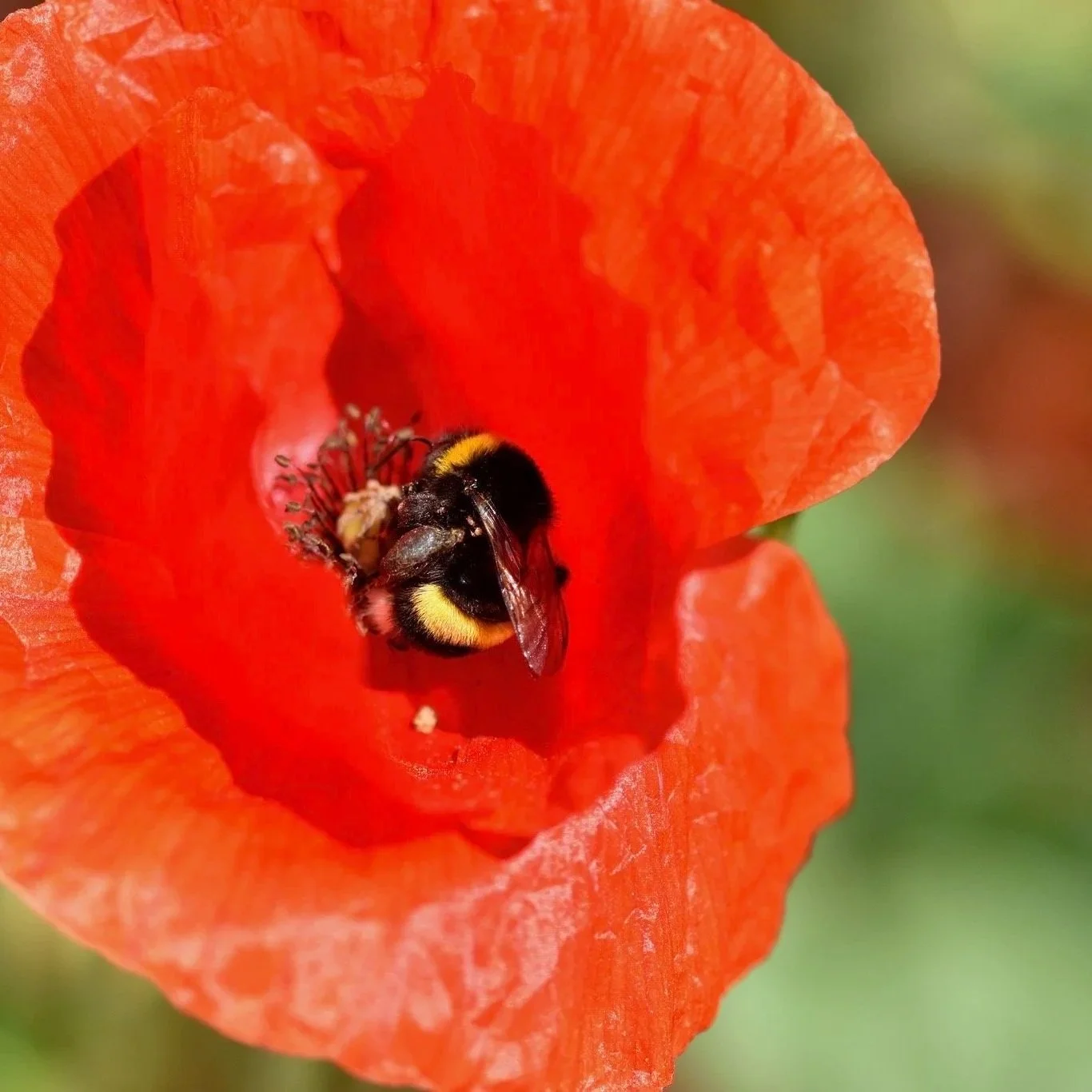
Common poppies don’t offer nectar in the usual way, but they are a brilliant pollen source. That dusty black centre is basically a pollen buffet, and you’ll often see bees absolutely clarted in it. Poppies can be particularly useful in early summer when a lot of insects are raising young and need reliable pollen.
The best way to think of poppies is as part of a wider mix. They’re not the whole meal, but they’re a very good course.
How to grow poppies successfully
This is the bit people get wrong, so here’s the plain truth.
1) Pick the right place
Poppies want sun and open ground. If the spot is shaded, damp, or already full of strong plants, they’ll struggle.
Good places include:
the edge of a veg patch
a sunny border you can thin out
a bare patch near a fence
a scruffy corner you’ve decided to stop fighting
2) Clear a patch, properly
You don’t need a field. Even a dinner-plate-sized patch helps. Scrape back vegetation, remove the mat of roots, and expose soil. If you can get down to crumbly, open soil, you’ve already done half the job.
3) Don’t bury the seedballs
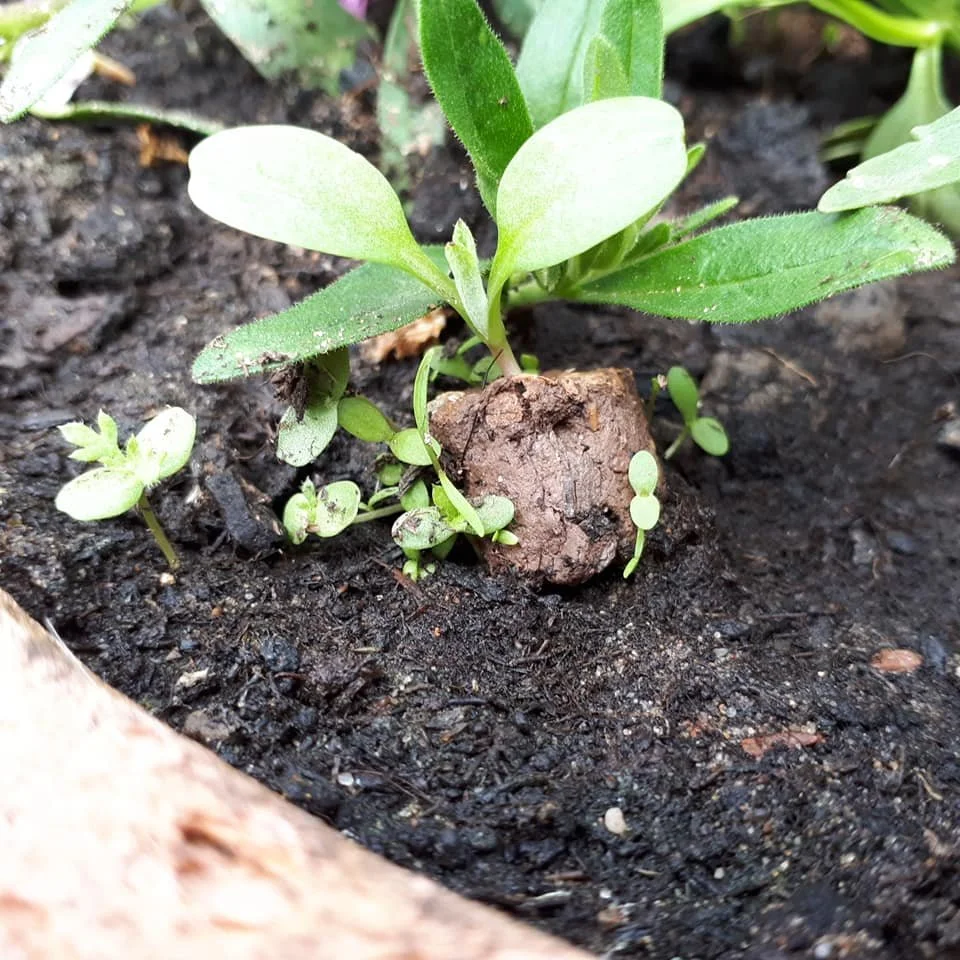
Poppy seed is tiny. It needs light and a shallow position. So if you’re sowing loose seed, scatter it and press it in, or rake very lightly. With seedballs, it’s the same idea: place them on the surface, don’t dig them in.
4) Water at the start
If spring is dry (which it often is once the sun arrives), water makes all the difference. The goal is to keep the surface consistently damp while things germinate and get their first roots down. Once established, poppies are tougher than they look.
5) Expect a natural look
Poppies are not bedding plants. They’ll be a bit uneven, a bit wild, occasionally ridiculous in where they decide to grow. That’s the charm. If you want uniform, you’re in the wrong genre.
A few poppy myths, politely dismantled
“Poppies like rich soil”
Not really. Rich soil tends to grow lush greenery and vigorous grasses, which poppies hate competing with. They often do better on poorer ground.
“I planted poppies and got nothing, so they must be hard to grow”
They’re easy to grow in the right conditions, but fussy about one thing: competition. Most poppy failures are just poppies being smothered.
“Poppies come back every year”
Common poppy is an annual, but it self-seeds if it’s happy. The trick is leaving a bit of bare soil for seedlings the following year, or lightly disturbing the ground in autumn or early spring.
“All poppies are the same”
Not at all. “Poppy” covers loads of species. The common poppy (Papaver rhoeas) is the classic wild one. Garden poppies are often different species or varieties, with very different looks and habits.
Why we love them as a “Poppy Bomb” idea
At Beebombs we’re obsessed with plants that do two things at once:
look properly stunning
help normal people turn a boring patch of ground into habitat
Poppies are perfect for that. They’re iconic, unmistakable, and they create instant “wildness”. They’re also a great gateway plant. People throw down poppies, get a result, and suddenly they’re looking at their garden differently. That’s the real win.
A poppy patch doesn’t need to be huge. It just needs to exist. Once it’s there, it changes how a space feels. A bit more countryside, a bit less sterile.
Best times to sow
In the UK, poppies can be sown:
early autumn, for flowers the next summer (often the easiest route)
spring, as soon as conditions warm up (but keep on top of watering)
Autumn sowing often gives stronger plants because they establish quietly, then surge when spring arrives.
If you only remember one thing
Poppies need light and space more than they need anything else. If you give them a sunny patch of bare soil and keep it damp while they start, they’ll do the rest. If you scatter them into a lawn and hope for magic, the lawn will politely eat them.
Create your wild space, poppy edition
If you’ve got a corner that’s doing nothing, a border that’s become a green mush, or a bit of ground you’re tired of “maintaining”, poppies are your permission slip to stop trying so hard. Clear a patch, let it be a little rough around the edges, and enjoy the moment when the first red flower opens and suddenly the whole place looks like summer.
And yes, bees will notice too.
#createyourwildspace #Pollinators #Biodiversity #Bees #beebombs #gift #nature #bringthebeesback #weareone #eco
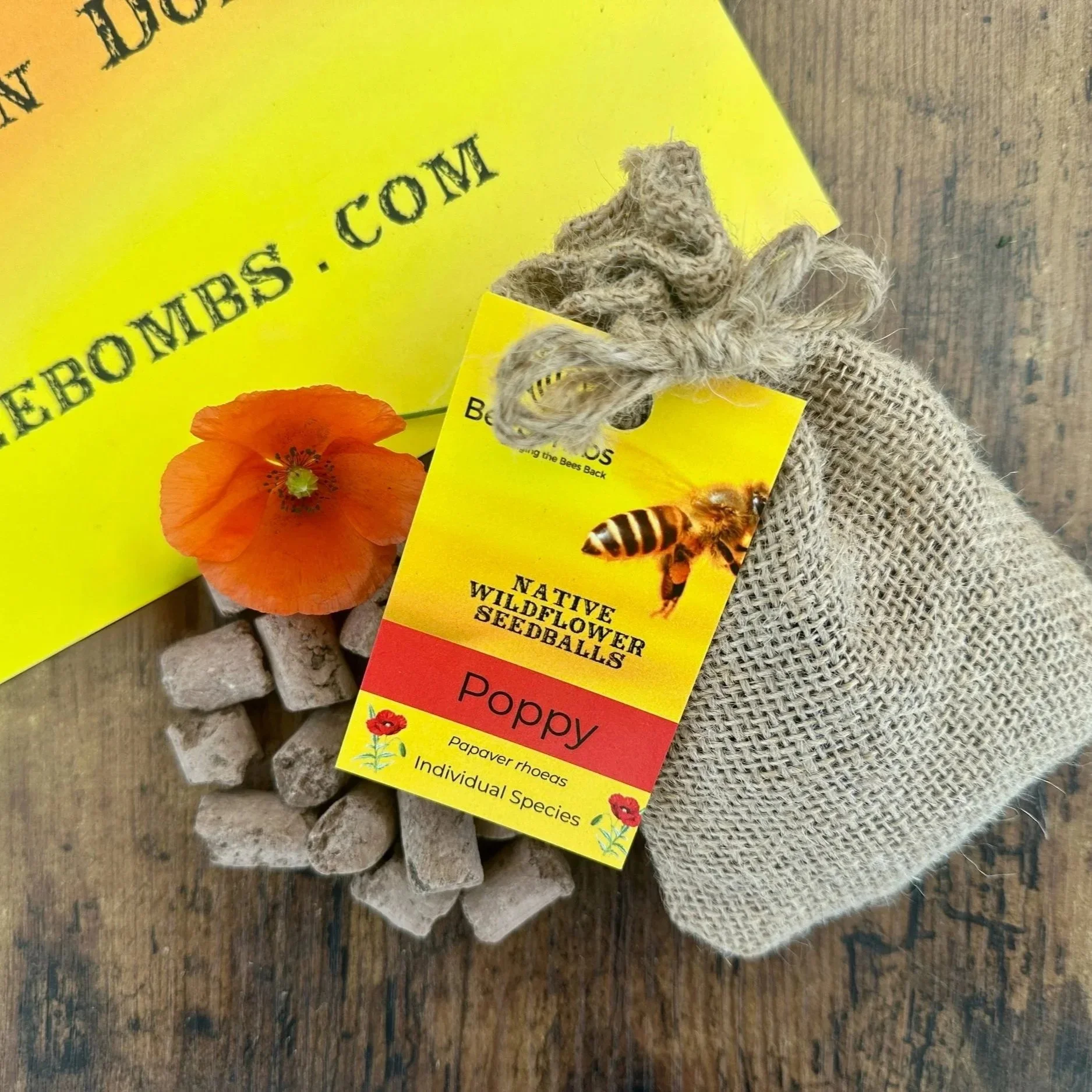
Purely Poppy Bombs.
An explosion of this most iconic of British wildflowers. Hundreds of Poppy seeds encased in nourishing soil and protective clay to give them the best chance of success.
We use no plastic in our packaging or process and make your Beebombs in a truly sustainable and traditional way on our farm in Parley, Dorset.
Free tracked postage and packing on all orders, Dispatched same day (before 12pm) via Royal Mail Tracked 48 service, to anywhere in the UK.
Next day delivery also available.